logo
ราคาดี  ออนไลน์

รายละเอียดสินค้า

Created with Pixso. บ้าน Created with Pixso. ผลิตภัณฑ์ Created with Pixso.
สารกึ่งตัวนำ
Created with Pixso.

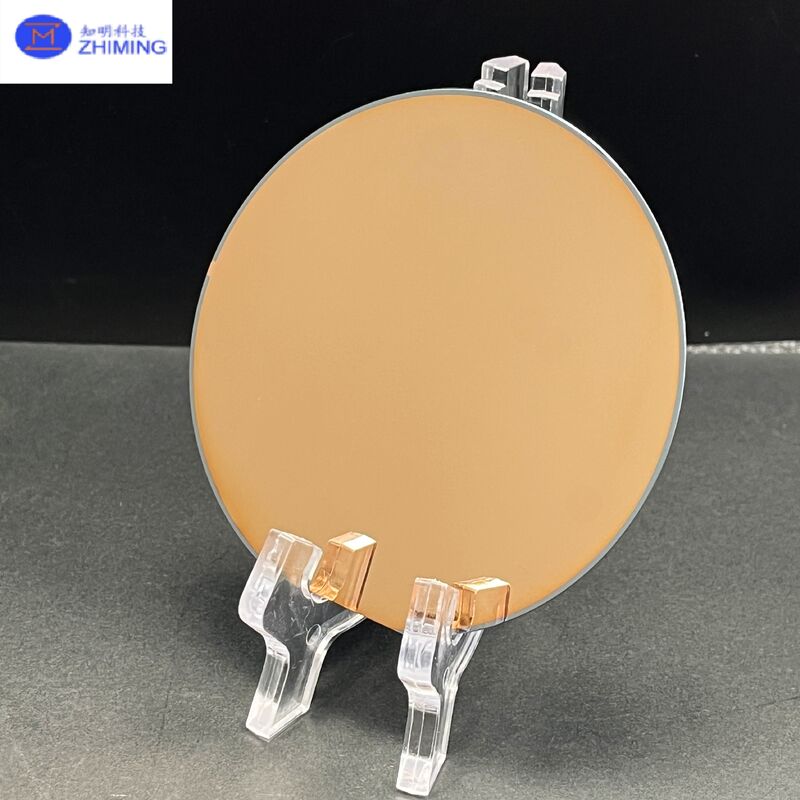
Ti/Cu Metal-Coated Silicon Wafer (Titanium/Copper)

Ti/Cu Metal-Coated Silicon Wafer (Titanium/Copper)

ชื่อแบรนด์: ZMSH
ปริมาณการสั่งซื้อขั้นต่ำ: 1
ราคา: by case
รายละเอียดการบรรจุ: กล่องแบบกำหนดเอง
เงื่อนไขการจ่ายเงิน: ที/ที
ข้อมูลรายละเอียด
สถานที่กำเนิด:
จีน
ขนาดเวเฟอร์:
2", 4", 6", 8"; ชิ้นขนาด 10 × 10 มม. ขนาดที่กำหนดเองใด ๆ ที่มีจำหน่าย
ประเภทการนำไฟฟ้า:
ชนิด P, ชนิด N, ความต้านทานสูงจากภายใน (Un)
การวางแนวคริสตัล:
<100>, <111> ฯลฯ
ฟิล์มโลหะที่มีจำหน่าย (ซีรีส์):
Ti/ลูกบาศ์ก; มีจำหน่าย: Au, Pt, Al, Ni, Ag ฯลฯ
วัสดุพื้นผิว:
ซิลิคอน (ศรี); ทางเลือก: ควอตซ์, แก้ว BF33 ฯลฯ
ความหนาของพื้นผิว (µm):
2": 200 / 280 / 400 / 500 / ตามต้องการ 4": 450 / 500 / 525 / ตามต้องการ; 6": 625 / 65
สามารถในการผลิต:
โดยกรณี
คำอธิบายผลิตภัณฑ์

Product Overview

Ti/Cu metal-coated silicon wafers are fabricated by depositing a titanium (Ti) adhesion layer followed by a copper (Cu) conductive layer on high-quality substrates using standard magnetron sputtering. The Ti layer enhances film adhesion and interfacial stability, while the Cu layer provides excellent electrical conductivity. Multiple wafer sizes, conductivity types, orientations, resistivity ranges, and film thicknesses are available, with full customization supported for research and industrial prototyping.

Ti/Cu Metal-Coated Silicon Wafer (Titanium/Copper) 0     Ti/Cu Metal-Coated Silicon Wafer (Titanium/Copper) 1


Structure & Process

  • Film stack: Substrate + Adhesion layer (Ti) + Coating layer (Cu)

  • Deposition process: Standard magnetron sputtering (optional: thermal evaporation / electroplating by request)

  • Key features: Strong adhesion, low resistance surface, suitable for subsequent lithography, electroplating build-up, or device fabrication.

 Ti/Cu Metal-Coated Silicon Wafer (Titanium/Copper) 2     Ti/Cu Metal-Coated Silicon Wafer (Titanium/Copper) 3


Specifications (Customizable)


Item Specification / Options
Wafer size 2", 4", 6", 8"; 10×10 mm pieces; any custom size available
Conductivity type P-type, N-type, Intrinsic high-resistivity (Un)
Crystal orientation <100>, <111>, etc.
Resistivity Low: < 0.0015 Ω·cm; Medium: 1–10 Ω·cm; High: > 1000–10000 Ω·cm
Substrate thickness (µm) 2": 200 / 280 / 400 / 500 / as required; 4": 450 / 500 / 525 / as required; 6": 625 / 650 / 675 / as required; 8": 650 / 700 / 725 / 775 / as required
Substrate material Silicon (Si); optional: quartz, BF33 glass, etc.
Stack structure Substrate + Ti adhesion layer + Cu coating
Deposition method Magnetron sputtering (standard); optional: thermal evaporation / electroplating
Available metal films (series) Ti/Cu; also available: Au, Pt, Al, Ni, Ag, etc.
Film thickness 10 nm, 50 nm, 100 nm, 150 nm, 300 nm, 500 nm, 1 µm, etc. (customizable)


Ti/Cu Metal-Coated Silicon Wafer (Titanium/Copper) 4

Applications

  • Ohmic contacts & electrodes: conductive substrates, contact pads, electrical testing

  • Seed layer for electroplating: RDL, microstructures, MEMS electroplating processes

  • Nanomaterials & thin-film research: sol–gel substrates, nanomaterial growth and characterization

  • Microscopy & probe metrology: SEM, AFM, and other scanning probe microscopy applications

  • Bio/chemical platforms: cell culture, protein/DNA microarrays, reflectometry substrates, sensing platforms


Advantages

  • Excellent adhesion enabled by Ti interlayer

  • High conductivity and uniform Cu surface

  • Wide selection of wafer sizes, resistivity ranges, and orientations

  • Flexible customization for size, substrate, film stack, and thickness

  • Stable, repeatable process using mature sputtering technology


FAQ (Ti/Cu Metal-Coated Silicon Wafers)

Q1: Why is a Ti layer used under the Cu coating?
A: Titanium works as an adhesion (bonding) layer, improving the attachment of copper to the substrate and enhancing interface stability, which helps reduce peeling or delamination during handling and processing.


Q2: What is the typical Ti/Cu thickness configuration?
A: Common combinations include Ti: tens of nm (e.g., 10–50 nm) and Cu: 50–300 nm for sputtered films. Thicker Cu layers (µm-level) are often achieved by electroplating on a sputtered Cu seed layer, depending on your application.


Q3: Can you coat both sides of the wafer?
A: Yes. Single-side or double-side coating is available upon request. Please specify your requirement when ordering.